


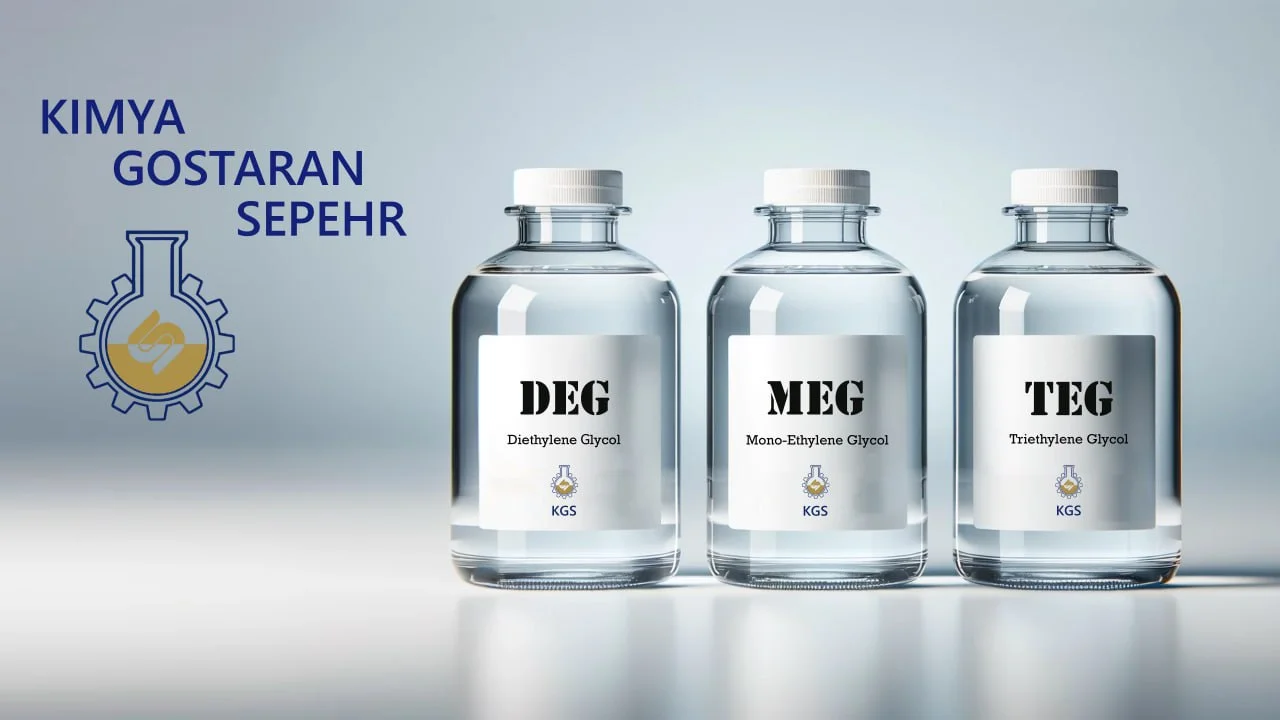
Triethylene Glycol
Triethylene Glycol (TEG): Product Overview, Properties, and Industrial Applications
Product Overview
Triethylene Glycol (TEG) is an organic compound belonging to the ethylene glycol family and is classified as an ether diol. It is typically a clear, colourless, viscous, and practically odourless liquid characterised by a high boiling point, low volatility at ambient temperature, complete miscibility with water, and two terminal hydroxyl groups.
These properties make TEG a valuable industrial chemical used as a process solvent, chemical intermediate, formulation component, and process fluid in selected applications.
Triethylene Glycol has the molecular formula C₆H₁₄O₄ and a molecular weight of 150.17 g/mol. Its molecular structure contains two terminal hydroxyl groups and two ether linkages. These functional groups influence its polarity, hydrogen-bonding behaviour, water affinity, and chemical reactivity.
One of the most important industrial applications of TEG is natural gas dehydration. In gas-processing facilities, TEG absorbs water from wet natural gas, helping reduce its moisture content. Its high boiling point and low vapour pressure are also beneficial in glycol regeneration systems, where absorbed water is removed, and the glycol is returned to the dehydration process.
Beyond gas processing, TEG is used in selected polyester resin systems, ester derivative plasticiser intermediates, lubricants, industrial solvents, heat-transfer formulations, and cement grinding aid formulations. Its suitability for each application depends on product grade, purity, water content, impurity profile, and operating conditions.
Chemical Structure and Identification
Chemical Name: Triethylene Glycol
Abbreviation: TEG
Synonyms: Triglycol; 2-[2-(2-Hydroxyethoxy)ethoxy]ethanol
CAS Number: 112-27-6
EC Number: 203-953-2
Molecular Formula: C₆H₁₄O₄
Molecular Weight: 150.17 g/mol
Chemical Structure:
HO–CH₂–CH₂–O–CH₂–CH₂–O–CH₂–CH₂–OH
The molecular structure contains two terminal hydroxyl groups and two ether linkages. The hydroxyl groups can participate in hydrogen bonding and selected chemical reactions, including esterification. The ether linkages contribute to the compound's polarity, solubility behaviour, and molecular properties.
Physical and Chemical Properties
Triethylene Glycol is a polar, hygroscopic liquid that is completely miscible with water. Compared with Monoethylene Glycol (MEG) and Diethylene Glycol (DEG), TEG has a higher molecular weight and a higher boiling point, and it generally exhibits higher viscosity.
Its reference boiling point at atmospheric pressure is approximately 285 °C, while its melting point is approximately −7 °C. Its density is approximately 1.12–1.13 g/cm³ under commonly reported measurement conditions. Exact values depend on temperature, sample composition, purity, and test method.
The high boiling point and very low vapour pressure of TEG are particularly important in applications requiring a polar liquid with relatively low volatility.
Industrial Applications
1. Natural Gas Dehydration
One of the principal applications of TEG is the removal of water from natural gas. In absorption-based dehydration systems, wet gas contacts lean glycol, allowing water to transfer from the gas phase into the liquid glycol phase.
The water-rich glycol is subsequently sent to a regeneration unit. Heat and controlled operating conditions are used to separate absorbed water, allowing regenerated glycol to be recycled into the dehydration process.
The performance of a TEG dehydration unit depends on factors including lean glycol concentration, contact temperature, pressure, gas flow rate, absorber design, contact stages, regeneration temperature, and glycol losses.
TEG quality is important for reliable operation. Water content, accumulated contaminants, degradation products, and other impurities can influence process efficiency and the quality of the treated gas.
2. Polyester Resin Manufacturing
Triethylene Glycol can be used as a raw material in selected polyester and unsaturated polyester resin systems. Its hydroxyl groups react with suitable carboxylic acids or their derivatives during esterification and polymer formation.
Incorporation of TEG into a polymer structure may influence chain flexibility, polarity, thermal behaviour and certain mechanical properties. The actual effect depends on the other monomers, formulation ratios, target molecular weight, and reaction conditions.
3Plasticisersrs and Ester Derivatives
TEG can serve as a starting material for the preparation of selected organic esters and chemical derivatives. Depending on their molecular structure, these derivatives may be suitable for specific industrial formulations and polymer systems.
The use of TEG as a raw material for ester synthesis should be distinguished from the direct use of TEG in a finished formulation, because the resulting products may have different performance, compatibility, and safety characteristics.
4. Industrial Solvents and Speciality Formulations
The polarity, water miscibility, and relatively low volatility of TEG may be beneficial in selected industrial formulations. Its suitability depends on the solubility requirements of the target compounds, viscosity, evaporation behaviour, chemical compatibility, and operating conditions.
TEG is also used in certain specialised formulations, including selected printing-ink and equipment-cleaning applications. Suitability must be confirmed for the specific formulation and intended use.
5. Heat-Transfer Fluids and Coolants
Triethylene Glycol may be considered for selected industrial fluid and heat-transfer systems. Thermal properties, viscosity, low-temperature behaviour, equipment compatibility, and chemical stability must be evaluated before selection.
TEG should not be treated as a universal replacement for other heat-transfer fluids or antifreeze formulations. The performance of aqueous glycol mixtures depends on composition, concentration, temperature, and additives.
6. Cement Grinding Aid Formulations
Certain glycol compounds, including TEG, are used in cement grinding aid formulations. Their effects may include changes in particle agglomeration, grinding behaviour, and milling performance.
The effectiveness of TEG depends on cement composition, raw materials, additive formulation, dosage, and grinding conditions. The optimum dosage should be established through appropriate laboratory and industrial trials.
7. Lubricants and Chemical Intermediates
Triethylene Glycol can be used in the preparation of selected organic derivatives and industrial formulations. Its hydroxyl groups provide reactive sites for specific chemical transformations, while its ether-containing backbone contributes to the polarity and solubility characteristics of the resulting compounds.
The suitability of TEG for these applications depends on the intended chemical reaction, compatibility with other components, and final product requirements.
Technical Advantages of Triethylene Glycol
The principal technical characteristics of TEG include:
-
High boiling point and relatively low volatility at ambient temperature.
-
Complete miscibility with water.
-
Water-absorption capability relevant to natural gas dehydration.
-
Two hydroxyl groups that can participate in selected chemical reactions.
-
Potential use as a raw material for selected polyester resins and ester derivatives.
-
Applicability in certain industrial formulations, process fluids, and speciality chemical systems.
The practical benefits of TEG must be evaluated under actual operating conditions and against the requirements of the intended application.
Comparison with MEG and DEG
Monoethylene Glycol (MEG), Diethylene Glycol (DEG), and Triethylene Glycol (TEG) belong to the same chemical family but differ in molecular structure and physical properties.
MEG contains two carbon atoms, DEG contains four, and TEG contains six. All three compounds contain two hydroxyl groups, but the number of ether linkages in their molecular structures differs.
Their respective molecular weights are approximately 62.07 g/mol for MEG, 106.12 g/mol for DEG, and 150.17 g/mol for TEG. TEG has a higher boiling point than MEG and DEG, making it useful in applications such as natural gas dehydration and processes that require lower volatility.
These compounds are not interchangeable in every application. Selection should be based on process objectives, required physical properties, chemical compatibility, safety requirements, and cost.
Quality Control and Product Selection
Quality control for TEG should be based on its intended application. Relevant parameters may include purity, water content, colour, acidity, density, refractive index, and the composition of glycol impurities.
In natural gas dehydration, the water content of lean and rich glycol, accumulated impurities, degradation products, and the condition of the circulating glycol system are particularly important.
For critical applications, the batch-specific Certificate of Analysis (COA) should be reviewed and compared with the approved product specification. Additional laboratory tests should be performed using suitable validated methods when required.
Storage and Handling
Triethylene Glycol should be stored in clean, tightly closed, chemically compatible containers or tanks. Measures should be taken to prevent moisture ingress, particulate contamination, and contact with incompatible materials.
Storage temperature, packaging, transportation conditions, and handling requirements should follow the supplier's Safety Data Sheet (SDS) and applicable safety procedures. In industrial systems, clean transfer equipment and prevention of cross-contamination are also important.
Safety and Environmental Considerations
Although TEG has shown relatively low acute oral toxicity in some assessments compared with certain other glycols, it must not be assumed to be harmless for human use. Appropriate safety measures depend on the product grade, exposure route, and intended application.
Accidental ingestion, uncontrolled exposure, and uncontrolled environmental release must be prevented. Suitable personal protective equipment, workplace hygiene, and documented spill-management procedures should be implemented.
Any proposed use in food, pharmaceutical, cosmetic, or other consumer applications requires evaluation of the specific grade, purity, applicable regulations, and safety of the intended use.
Conclusion
Triethylene Glycol is an important industrial chemical characterised by a high boiling point, relatively low volatility, and complete miscibility with water. Its most significant application is natural gas dehydration, while additional uses include selected polyester resin systems, ester derivatives, industrial fluids, and cement grinding aid formulations.
Appropriate TEG selection requires verification of purity, water content, impurities, process conditions, and safety requirements. Kimia Gostaran Sepehr presents TEG as part of its industrial chemical portfolio, with final product specifications to be confirmed against the applicable grade and batch-specific Certificate of Analysis.
:::
Attributes
Triethylene Glycol (TEG) is an organic compound belonging to the ether diol family. It is typically supplied as a clear, colourless, viscous, and practically odourless liquid. Its high boiling point, relatively low volatility at ambient temperature, and complete miscibility with water make it useful in gas processing, resin manufacturing, chemical intermediate production, and selected industrial formulations.
With the molecular formula C₆H₁₄O₄ and a molecular weight of 150.17 g/mol, TEG contains two terminal hydroxyl groups and two ether linkages. These structural features influence its polarity, hydrogen-bonding behaviour, water affinity, and chemical reactivity.
Key Product Attributes:
Chemical Name: Triethylene Glycol
Abbreviation: TEG
CAS Number: 112-27-6
Molecular Formula: C₆H₁₄O₄
Molecular Weight: 150.17 g/mol
Appearance: Clear, colourless liquid
Functional Groups: Two hydroxyl groups and two ether linkages
Water Miscibility: Complete
Hygroscopicity: Hygroscopic
Boiling Point: Approximately 285 °C at atmospheric pressure
Melting Point: Approximately −7 °C
Volatility at Ambient Temperature: Relatively low
Industrial Role: Process solvent, chemical intermediate, and formulation component
Potential Applications: Natural gas dehydration, selected polyester resin systems, ester derivatives, industrial fluids and heat-transfer formulations, and cement grinding aid formulations.
Quality Verification: Based on the approved technical specification and batch-specific Certificate of Analysis (COA).
The performance of TEG depends on the intended application, purity, water content, impurity profile, and operating conditions. Appropriate grade selection and process compatibility assessment are necessary to achieve reliable industrial performance.
Actual purity, water content, and impurity levels must be verified using the supplier's technical documentation and analytical results for the relevant batch.
